
Can You Repair Just One Section of Damaged Siding?
Can You Repair Just One Section of Damaged Siding?
Table of Contents
- 1. Why One Damaged Section Does Not Always Mean Full Replacement
- 2. When Localized Siding Repairs May Be Practical
- 3. What Should Be Checked Before Repairing One Section?
- 4. How Can Individual Siding Panels Be Replaced?
- 5. What Can Affect the Scope of a Siding Repair?
- 6. Frequently Asked Questions
- 7. Key Takeaways
- 8. Making the Right Repair Decision
- 9. Disclaimer
- 10. Reference
If you notice one cracked panel, a loose section, or a small damaged area on your home’s exterior, you might immediately wonder whether all of the siding needs to come off. Fortunately, that is not always the case. Siding repair services may be able to address an isolated problem when the surrounding materials and the structure underneath remain in suitable condition.
The important part is determining whether the damage really stops where you can see it. Learning about how moisture can affect siding and the materials behind it can help you understand why a small visible problem sometimes deserves a closer inspection.
Here is what you need to know about repairing one section, what can make a localized repair practical, and when a larger area may need attention.
1. Why One Damaged Section Does Not Always Mean Full Replacement
Siding covers a large portion of your home’s exterior, but damage does not necessarily affect every part of it equally. A single panel might crack after an impact, one piece may loosen, or a relatively small section may deteriorate while nearby siding remains in good condition.
That distinction matters because the goal of a repair is not simply to replace everything around the damaged area. It is to correct the affected portion while preserving material that continues to perform properly.
Start With the Extent of the Damage
Imagine that one piece of siding is cracked while the panels above, below, and beside it remain secure. If there are no signs that moisture has spread behind the exterior and compatible replacement material is available, the repair may remain fairly localized.
The situation changes if several surrounding panels are loose, warped, deteriorated, or showing similar symptoms. What initially looks like one damaged section may actually be the most visible part of a broader problem.
This is why the size of the visible defect alone does not determine the scope of the work.
The main question is not simply how much siding looks damaged. It is whether the damage is truly isolated and whether the surrounding system remains sound.
2. When Siding Repair Services Can Address Localized Damage
A localized repair tends to make the most sense when the problem has a clear boundary. The surrounding siding should still be performing as expected, and the materials underneath the affected area should not show signs of a larger issue.
The type of damage matters too. A small impact crack is different from widespread deterioration caused by prolonged moisture exposure. Similarly, one loose panel is different from an entire wall where multiple pieces have started shifting or separating.
Residential Siding Repair Depends on More Than Appearance
You might look at the exterior and see only a small damaged spot. A closer evaluation considers more than what is visible from several feet away.
The surrounding panels, attachment points, seams, trim, and underlying wall components may all provide useful information. If those areas remain in acceptable condition, replacing or repairing a limited section may be reasonable.
On the other hand, repeated problems in neighboring sections can change the decision. If several panels are deteriorating for the same reason, fixing only the most noticeable piece may leave the underlying cause unresolved.
A targeted repair works best when both the visible damage and its cause are limited in scope.
3. What Should Be Checked Before Repairing One Section?
Before deciding that only one piece needs attention, it helps to understand what is happening around and behind the damaged area.
The siding itself is only the exterior surface you can see. Depending on the wall assembly, other components may sit behind it and help manage moisture and protect the structure.
A useful evaluation may consider the condition of the damaged piece, nearby siding panels, attachment points, wall surface, moisture-control components, and any visible signs of deterioration.
Look Beyond the Most Obvious Defect
For example, suppose a lower section of siding has developed a crack. If the damage came from a single impact and everything around it remains dry and secure, the scope could be limited.
Now consider a section that is discolored, soft, distorted, or repeatedly damp. In that situation, removing the damaged material may reveal moisture damage or deterioration that was not visible from the outside.
Understanding the options for addressing siding that needs repair or replacement can provide additional context when the condition extends beyond one isolated panel.
This does not mean every small defect hides a major problem. It simply means the visible surface should not be the only factor used to decide how much work is necessary.
4. How Can Individual Siding Panels Be Replaced?
The repair method depends heavily on the siding material. Vinyl, fiber cement, wood, engineered products, and other materials are installed differently, so there is no single repair process that applies to every exterior.
Vinyl siding provides a useful example of how a localized replacement can work.
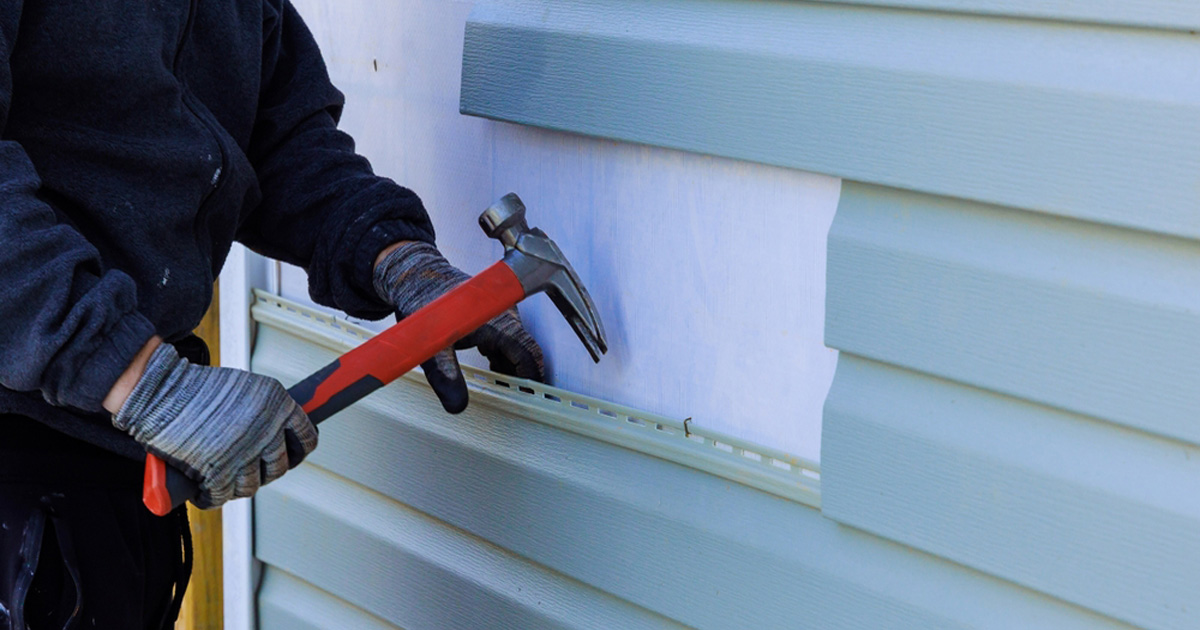
According to the Polymeric Exterior Products Association, a damaged vinyl siding panel can be unlocked from the panel above, removed, replaced, and then locked back into the surrounding siding.
That guidance demonstrates why damage to one vinyl panel does not automatically require removing siding from an entire wall.
Exterior Siding Repair Varies by Material
The same procedure should not be assumed for every siding product.
Different siding materials have their own fastening methods, clearances, joint requirements, and manufacturer instructions. A repair technique that is appropriate for vinyl may not be appropriate for fiber cement or wood.
Material condition also matters. Older siding can sometimes become more difficult to work with without disturbing nearby pieces. That is one reason identifying the exact siding material and understanding how it was installed are important before work begins.
Localized replacement is possible in some situations, but the correct method depends on the siding system involved.
5. What Can Affect the Scope of a Siding Repair?
Two homes with similar-looking damage can require very different amounts of work. The visible size of the damaged area is only one consideration.
Material availability can be especially important. Even if only one panel needs replacement, finding a compatible piece may become more difficult when the original siding is older or no longer manufactured.
Color can create another challenge. Existing siding has spent years exposed to sunlight, rain, dirt, and changing weather conditions. A new replacement piece may therefore look slightly different even when its original color designation is the same.
Siding Damage Repair Can Involve Several Variables
The contractor may need to consider the damaged area, surrounding material, access, siding type, underlying condition, and availability of compatible replacement pieces.
These factors can also influence the expected scope and cost of the work. Understanding what can influence the price of a siding project can give you useful context when comparing a small repair with more extensive work.
Matching does not necessarily determine whether a repair is structurally possible, but appearance can matter to you as a homeowner. It is worth discussing realistic expectations before replacement material is installed.
A good repair decision balances the physical condition of the exterior with practical considerations such as compatibility, appearance, and the likelihood of additional deterioration nearby.
Frequently Asked Questions
Can You Replace Just One Piece of Siding?
Sometimes. Whether an individual piece can be replaced depends on the siding material, how the system was installed, the condition of surrounding pieces, and whether compatible replacement material is available.
It is also important to determine whether the visible defect is actually isolated. If nearby siding or underlying materials are damaged, the appropriate repair area may need to extend beyond the single piece you first noticed.
How Do You Know If Damaged Siding Can Be Repaired?
Start by looking at the extent and type of damage. A localized crack, impact mark, or loose panel may present a different situation from widespread warping, deterioration, or recurring moisture problems.
The condition behind the siding also matters. If damage has affected underlying wall materials, correcting only the exterior surface may not address the full problem.
Will a New Piece of Siding Match the Existing Siding?
Not always perfectly. Even when the same product and original color are available, older siding may have changed in appearance after years of weather and sunlight exposure.
Product availability can also be an issue with older siding. If the original material has been discontinued, finding a close match may take additional effort or affect the practical repair options.
Does Cracked Siding Always Need to Be Replaced?
Not every crack leads to the same recommendation. The siding material, crack location, size, surrounding condition, and manufacturer’s requirements can all influence what is appropriate.
The cause also matters. Damage from a one-time impact is different from cracking associated with broader movement, improper installation, or material deterioration. Identifying why the crack developed can help prevent the same issue from being overlooked.
What Happens If There Is Damage Behind the Siding?
If removing damaged siding reveals underlying wall damage, the repair may need to expand so the affected material can be properly addressed.
That does not automatically mean all of the siding needs replacement. The appropriate scope depends on how far the underlying problem extends and whether the surrounding wall and siding remain in suitable condition.
Key Takeaways
Repairing one section of siding can be practical, but the decision should be based on more than the size of the visible defect. What is happening around and behind that area can be just as important.
- One damaged panel does not automatically mean an entire wall needs replacement.
- Localized damage should be evaluated along with nearby siding and underlying materials.
- Different siding materials require different repair and replacement methods.
- Moisture or underlying wall damage can increase the scope of what initially appears to be a small repair.
- Replacement material may not perfectly match older siding because of weathering or product availability.
- Identifying the cause of the damage can be just as important as replacing the damaged piece.
The best repair scope is the one that addresses the actual problem without unnecessarily disturbing siding that is still functioning properly.
Making the Right Repair Decision
Seeing damage on one part of your home’s exterior can make the situation look bigger than it actually is. In some cases, the problem really is limited to a small section. In others, removing or closely examining that area reveals conditions that require a broader repair.
You do not need to decide based only on what you can see from the ground. Consider the siding material, surrounding panels, possible moisture exposure, condition underneath, and availability of compatible replacement material. Those details can provide a much clearer picture of whether a targeted repair makes sense.
It is also helpful to think about why the damage occurred. Correcting a cracked or loose piece without understanding the cause may leave you dealing with the same issue again.
Have questions about whether one damaged section can be repaired without replacing a larger portion of your exterior? Professional Siding Services can help evaluate the affected area and explain what repair or replacement options may be appropriate for its actual condition.
Disclaimer
This article is intended for general informational and educational purposes only. It is not professional construction, engineering, architectural, building-code, insurance, or manufacturer-specific advice.
Siding systems vary by material, manufacturer, age, installation method, wall construction, exposure, and existing condition. A visible crack, loose panel, discoloration, impact mark, or other exterior symptom cannot by itself establish the full extent or cause of damage.
Do not remove siding or disturb exterior wall components if doing so could expose you to unsafe conditions or cause additional damage. Repair methods should account for the specific siding product, applicable manufacturer instructions, local building requirements, moisture-management details, and the actual condition of the wall assembly.
The Polymeric Exterior Products Association guidance referenced in this article concerns vinyl siding. It should not be interpreted as repair instructions for every type of siding material.