What Should You Look for When Choosing Metal Roofing for Your Home?
What Should You Look for When Choosing Metal Roofing for Your Home?
Table of Contents
- 1. Start With What Your Home and Roof Actually Need
- 2. Compare Metal Roofing Materials and Their Differences
- 3. Understand the Different Types of Metal Roofing
- 4. What Should You Compare When Looking at Metal Roof Panels?
- 5. Think About Residential Metal Roofing Over the Long Term
- 6. Frequently Asked Questions
- 7. Key Takeaways
- 8. Choosing the Right Roofing System
- 9. Disclaimer
- 10. Reference
Choosing metal roofing involves more than finding a color or style you like. Metal Roof Panels can differ in material, profile, finish, attachment method, and other details that influence how the finished roofing system works with your home.
You do not need to become a roofing expert to compare your choices. You simply need to know which details are worth asking about. Understanding how different metal roofing systems are installed can provide useful context because panel design and attachment methods influence how the finished system comes together.
Here is what you should consider before deciding which metal roofing option makes sense for your home.
1. Start With What Your Home and Roof Actually Need
It is tempting to begin with colors, styles, and photographs of finished roofs. Those details matter, but your home’s actual roofing needs should come first.
Start by looking at the roof itself. A simple roof with broad, uninterrupted slopes presents different considerations from a roof with multiple valleys, dormers, walls, chimneys, skylights, or other penetrations. Roof shape and complexity can influence how different components need to fit together.
The condition of the existing roof also matters. The visible roofing material is only one layer of a larger assembly. Roof decking, roofing underlayment, flashing, ventilation components, and penetrations can all influence the project.
Then think about what matters most to you as a homeowner. Appearance may be a priority, but you may also care about maintenance, attachment design, finish options, or how visible the seams and fasteners will be.
This is why asking which metal roof is “best” does not always produce a useful answer. A better question is which roofing system fits your particular home, priorities, and project conditions.
Once you establish those priorities, comparing individual products becomes much easier.
2. Compare Metal Roofing Materials and Their Differences
The term metal roofing materials covers more than one option. Steel and aluminum are examples you may encounter, while other metals are also used in roofing applications.
The base material is important, but it is not the only characteristic worth considering.
A roofing product can also have a particular coating or finish. These surface treatments contribute to the characteristics and appearance of the finished product. Instead of simply asking what metal is being proposed, ask what complete roofing product you are comparing.
You may want to know what the panel is made from, which coating or finish is used, and what panel profile is being considered. Those questions give you more useful information than comparing products based only on color.
Appearance still matters because your roof occupies a large portion of your home’s exterior. The profile, seam pattern, finish, and color can change how prominent the roof looks from the street.
However, it is helpful to consider appearance alongside practical ownership questions. Different roofing materials and systems can have different inspection and maintenance considerations over time. Reading about what ongoing roof maintenance may involve can help you think beyond installation day when comparing your choices.
Try to compare complete roofing systems rather than assuming every product made from metal will have the same characteristics.
3. Understand the Different Types of Metal Roofing
Knowing the types of metal roofing available can make product comparisons much easier because the visible material is only part of what distinguishes one system from another.
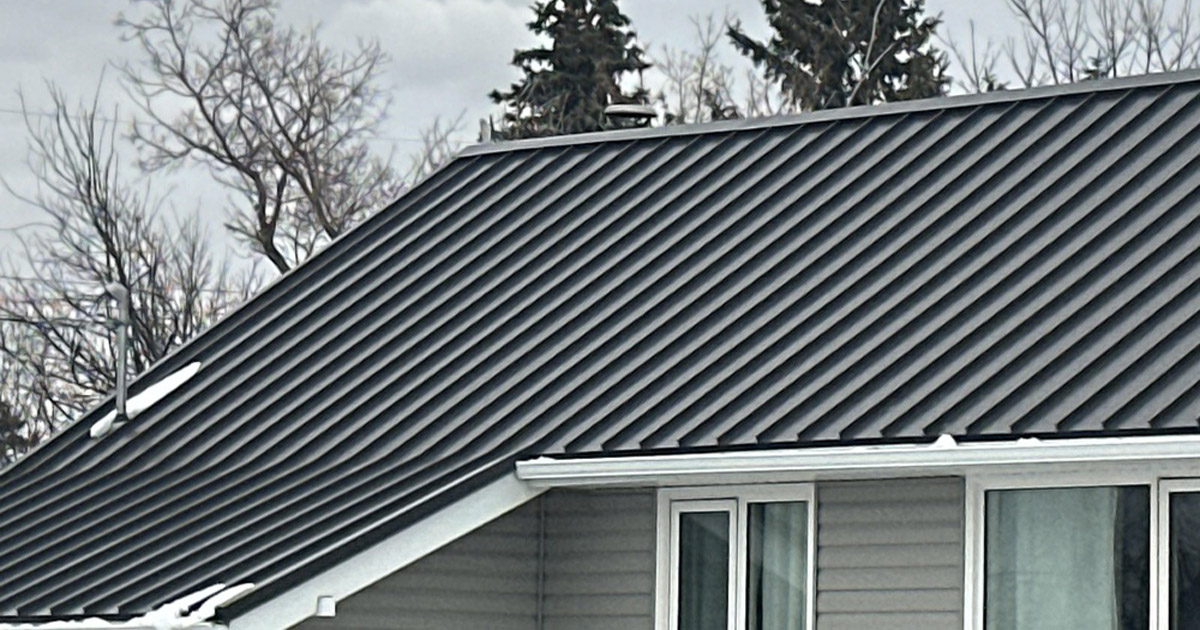
One term you are likely to encounter is standing seam roofing. This type of system is recognizable by raised seams running between adjoining panels. Its attachment design typically keeps the primary fasteners used to secure the panels concealed beneath or within the system.
You may also encounter exposed fastener panels. As the name suggests, these systems use attachment points that remain visible on the finished roof.
That difference is worth understanding because it affects more than appearance. The way adjoining panels connect and the way the roofing is attached are fundamental parts of the system’s design.
Roofing panel profiles can vary too. The width, shape, seam configuration, and surface pattern can change the appearance of a roof considerably. Some profiles create strong vertical lines, while others have a different visual rhythm across the roof surface.
Do not assume that two systems are interchangeable simply because both use metal. Ask how the panels connect, whether the primary fasteners are exposed or concealed, and what the profile will look like across your particular roof.
If you eventually want to move from general research to discussing the needs of your own property, exploring professional roofing options for your home can provide a natural next step.
4. What Should You Compare When Looking at Metal Roof Panels?
Once you understand the basic system types, you can compare individual products more carefully.
Several characteristics can distinguish one product from another. These include the base metal, panel profile, attachment method, protective coating, paint finish, and thickness. Looking at these details together gives you a much better understanding of what you are actually considering.
Panel thickness is one example of why terminology matters. Metal roofing products can be offered in different thicknesses, and the way thickness is specified can depend on the material and product. A higher or lower gauge number should not be treated as a universal measure across every type of metal without understanding the product specification.
Finish systems deserve attention as well. Metal roof finishes and protective coatings are not simply decorative details. They are part of the manufactured roofing product, so it is worth asking exactly what coating and finish are included rather than choosing solely from a color chart.
The Metal Construction Association’s Metal Roofing A-Z resource identifies several characteristics involved in metal roofing, including metal types, metallic coatings, paint finishes, profiles, and panel attachment. It also distinguishes among different panel configurations and roofing-system considerations.
That is a useful reminder that there is more to compare than the visible surface.
When reviewing an estimate or product specification, consider asking about:
- the metal and panel profile being proposed
- the coating and finish system
- the attachment method and whether fasteners are exposed or concealed
- the product specifications appropriate to the proposed roofing system
You do not need to choose based on one characteristic alone. Understanding how these details fit together gives you a clearer basis for comparing products.
5. Think About Residential Metal Roofing Over the Long Term
Choosing residential metal roofing should involve thinking about the years after installation, not only what the roof will look like when the project is finished.
Start with maintenance expectations. No roofing material should be treated as something you can completely ignore once it is installed. Roof penetrations, flashing, seams, drainage areas, and other components may need periodic attention regardless of the primary roof covering.
Fastening design is another consideration. A system with concealed fasteners differs from one where certain attachment points remain exposed. Understanding that distinction can help you ask more specific questions about future inspections and maintenance.
Think about the finish too. Your roof is constantly exposed to outdoor conditions, so knowing which finish system is being proposed and what the manufacturer recommends for care can be useful.
The components underneath the visible surface matter as well. Roofing underlayment and roof decking form part of the broader assembly. Choosing a high-quality visible product does not make the condition and preparation of the underlying roof irrelevant.
You should also ask what documentation comes with the proposed product. Manufacturer information can help you understand the specific material, finish, installation requirements, care recommendations, and warranty terms associated with that product.
The goal is not to predict exactly how your roof will perform decades into the future. It is to make a selection with a clearer understanding of what you are buying and what responsible ownership may involve.
Frequently Asked Questions
How do you know which type of metal roofing is right for your home?
Start with your roof design, existing conditions, appearance preferences, and long-term priorities. Then compare the actual systems available for your project. Pay attention to the panel profile, material, finish, attachment method, and manufacturer specifications rather than choosing based on appearance alone.
A roofing professional can evaluate the property itself and explain which products are appropriate for the roof’s configuration and condition.
What is the difference between standing seam and exposed fastener roofing?
One of the main differences involves how the panels are attached. Standing seam systems generally use concealed attachment arrangements, while exposed fastener systems have visible fasteners at the roof surface.
The systems can also differ in their panel profiles and connection details. Because those differences affect the overall assembly, it is better to compare complete systems rather than judging them only by their finished appearance.
Does the thickness of metal roofing matter?
Thickness is one characteristic of a roofing product, but it should not be considered by itself. The type of metal, panel design, coating, attachment system, manufacturer requirements, and intended application also matter.
If thickness is important to your comparison, ask for the actual product specification. That gives you more reliable information than assuming one gauge designation automatically makes a product appropriate for every roof.
What should you consider when choosing a metal roof finish?
Start with the specific finish system rather than color alone. Ask what type of coating or paint finish the product uses and review the manufacturer’s information for that particular roofing product.
You can then consider appearance alongside practical factors such as product specifications and recommended care. This approach gives you a more complete comparison than selecting a finish solely because it matches another exterior feature.
How much maintenance does a metal roof require?
Maintenance needs depend on the roofing system, property, environment, and manufacturer recommendations. Periodic professional inspections can help identify concerns involving flashing, penetrations, seams, drainage areas, exposed attachment points where applicable, and other roof components.
You should follow the care and inspection recommendations associated with your specific roofing product rather than relying on a universal maintenance schedule for every metal roof.
Key Takeaways
Choosing a metal roof becomes easier when you stop thinking of it as one generic product. Materials, profiles, finishes, attachment systems, and underlying roof conditions can all influence the final choice.
- Start with your home’s roof design, existing conditions, and priorities before comparing products.
- Compare the complete roofing system, including material, profile, finish, coating, and attachment method.
- Understand the practical differences between standing seam and exposed fastener systems.
- Ask for specific product information instead of relying only on broad terms such as “metal roof.”
- Consider maintenance and manufacturer recommendations as part of your decision, not as an afterthought.
Most importantly, ask questions when a specification or roofing term is unclear. Understanding what is actually being proposed makes it much easier to compare options fairly.
Choosing the Right Roofing System
Choosing metal roofing is not about finding one feature that automatically makes a product the right choice. A roof works as a system, so your decision should consider how the material, profile, finish, attachment design, underlying components, and existing roof conditions fit together.
The more clearly you understand those details, the easier it becomes to have a useful conversation about your project. You can ask what material is being proposed, how panels connect, what finish is included, how the system is attached, and what long-term care may involve.
You also do not have to make those decisions based on product descriptions alone. If you are comparing roofing options and want professional guidance about what may be appropriate for your property, you can explore roofing services to better understand the next steps.
Disclaimer
This article is intended for general informational purposes only. It should not be considered professional construction, engineering, architectural, financial, insurance, or legal advice.
Roofing materials, product specifications, panel profiles, attachment methods, underlayment requirements, coatings, finishes, and installation practices can vary according to the property, roofing system, manufacturer instructions, applicable requirements, and project conditions.
Do not use this article as a substitute for a property-specific roof evaluation or manufacturer documentation. A qualified roofing professional should evaluate your roof and recommend materials and installation approaches appropriate to its condition and design.